
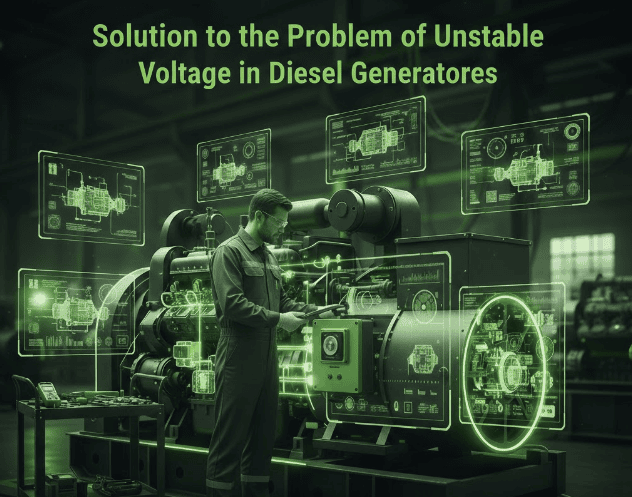
Unstable voltage in diesel Kragopwekkers is not ideal for your equipment. Of jy die kragopwekker vir industriële of kommersiële toepassings gebruik, die kragtoevoer moet die meeste van die tyd stabiel wees. Maar af en toe, you expect voltage fluctuation issues to arise. You need to identify the causes and available solutions.
1. Onstabiele spanning in dieselopwekkers: Meaning
Unstable voltage occurs when the voltage of your Diesel kragopwekker varies. The power supply in this case is not uniform or smooth. As a result of these variations, the equipment may fail. But what causes voltage fluctuations? Poor generator installation will likely result in performance issues.
Similarly, worn-out components, especially the alternator, may be the cause. Other peripheral causes include unbalanced load distribution and inconsistent engine speed. On rare occasions, generator output instability may be due to a faulty voltage regulator.
2. Solution to the Problem of Onstabiele spanning in dieselopwekkers
To address issues with the diesel generator, both mechanical and electrical factors that may affect it need to be identified. One should address these factors in advance before they cause problems. Some areas to observe include proper installation and maintenance. Ook, tighten the wiring, then calibrate the system.
Provided there is no overload, good diesel generators will supply a constant voltage to all equipment connected to the generator. Egter, it is not always the case when the generator fails. Buitendien, the unit will not maintain a fixed voltage due to poor service.
2.1 Improving Installation
An improperly installed generator will produce an unstable current when powered. Ook, if it has loose connections, misalignment, or is not earthed, it may not provide an appropriate output. The best way to ensure a constant voltage supply is proper installation and maintenance.
A stable foundation, grounding per the manufacturer’s requirements, and wiring are among the most important considerations during installation. Constructors and industries need additional features in their generators. The generator will operate in a vibrating environment and with optimum ventilation to sustain the same voltage.
When installing a generator for this purpose, we recommend hiring a professional to improve performance and extend your unit’s life.
2.2 Alternator Repair
The alternator is the most critical component in the diesel generator. So if faulty, the results will be a drop in the voltage. Check for damaged bearings; in addition, there may be loose terminals or broken insulation, which will likely reduce power output. Dus, to insulate against voltage variations, it is necessary to monitor them regularly. If the alternator is defective, repair it before switching the unit on. It helps prevent voltage fluctuation issues that may affect the load. In applications where the generator operates for many hours, make alternator servicing part of the maintenance plan. Replace worn-out parts or upgrade the alternator often.
2.3 Engine Maintenance
A steady rotational speed is an essential factor because it determines generator output instability. In some cases, irregular fuel delivery and worn-out injectors could affect the speed and cause unstable voltage. Clogged filters and poor lubrication lead to engine fluctuations, causing unstable voltage. Dus, regular engine maintenance could make the difference.
Clean the filters and change the oil regularly. There are many benefits associated with proper engine care. It minimizes fuel consumption and enables the generator to supply a constant voltage. It also maintains the generator in good condition, allowing it to meet peak demand.
2.4 Load Management
Load management is one of the causes of voltage fluctuation issues in generators. Most operators tend to overload the equipment. Overloading forces the engine to operate well above its rated capacity. Ook, excessive loading strains the engine, leading to an unsteady electrical supply. So the operator should not overload the engine.
They should balance the load and ensure it only uses 70–80 per cent capacity. Another valuable aspect of load management is the proper deployment of the generator. Industrial applications require heavy-duty generators because they operate for long periods. On the other hand, a light generator could find use in RVs and marine systems.
2.5 AVR Adjustment
AVR stands for automatic voltage regulator. This device regulates the voltage output. It is a critical component that helps in maintaining voltage stability. If the AVR system is old or the settings are incorrect, you are likely to experience generator output instability. Ook, faulty settings make it difficult for the generator to maintain the rated voltage.
You can reduce or eliminate problems associated with AVR by buying high-quality generators with robust AVR systems. Similarly, checking and calibrating the AVR system often guarantees consistent voltage output.
3. How to Diagnose Onstabiele spanning in dieselopwekkers
Many operators find it challenging to diagnose voltage fluctuation issues. One reason is not knowing where to start. But this need not be the case. The first step to diagnose unstable voltage is to check the mechanical and electrical systems. Ordinarily, operators should start with the built-in monitoring system. It could provide valuable information.
The next step is to check the electrical measuring devices, which give further details. Proper diagnosis helps identify the problem and fix it before it causes unstable voltage. It protects equipment and allows for continued operation.
3.1 Control Panel Diagnostics
Modern generators come equipped with a control panel. The panel provides data on voltage, load, and frequency. These readings are essential to the user, so review them regularly to identify fluctuations that may affect operations.
If your engine is experiencing voltage fluctuations, these devices are likely to detect them and notify the operator. The operator should then take early intervention measures to minimize failures and equipment damage. Timely intervention ensures steady, reliable power delivery to all equipment.
3.2 Electrical Testing
Electrical testing is one of the first diagnostic tests whenever an operator notices unstable voltage output. At his disposal are tools such as multimeters, testers, and voltmeters, which he can use to measure generator output instability across different loads.
The test serves two purposes. Firstly, it helps reveal how the generator responds to changes in load demand and identifies loose connections or grounding issues.
The tools also help identify damaged coils or those that need repair. In summary, electrical testing can help identify issues that routine checks miss or fail to fix. Daarby, they ensure that all repairs are dependent on facts.
3.3 Visual & Basic Inspections
It is a physical check to enable the operator to locate loose cables and corroded wires. It also helps them detect worn belts, leaking fuel lines, and other obstructions that may prevent the generator from generating the required power voltage.
Some signs the operator needs to observe include discolouration and overheating. There are others, such as broken insulation and irregular vibration. Typically, generators operate in harsh environments and are not easily damaged. So ensure to monitor abnormal engine sounds and check for loose wires.
4. Onstabiele spanning in dieselopwekkers Tekens
Voltage fluctuations issues are a tipping point that something is not well, and a big failure could occur unless you do something about it. Be sensitive to alarms and notifications. Buitendien, monitor the heat and abnormal engine sounds.
If the alarm or sensor goes off, shut down immediately. Continued operation under this condition will either damage the load or the generator. Often, such damages lead to expensive repairs.
4.1 Alarm Notifications
Contemporary generators have alarm systems that notify the operator when the generator’s output instability is below or above the rated level. Daarby, when it experiences a phase imbalance or an abnormal frequency, it sends an alarm and a message to the control panel.
A repeated alarm is a sign of an issue that needs a solution. Delays in responding or inaction can damage the equipment.
4.2 Erratic Performance
Unstable output voltage results in erratic performance of the connected equipment. A quick diagnosis of the problem’s root cause may be necessary.
4.3 Overheating Components
Overheating causes voltage fluctuation issues. The fluctuation results in excessive heat, weakening insulation, and reducing component lifespan. On the same note, too much heat may burn it, making the cable appear colored and produce a smell.
Naked cables are dangerous and could lead to fatal accidents. Daarom, early detection and correction could prevent unexpected downtime.
4.4 Circuit Breakers Tripping
A circuit breaker protects the load from voltage fluctuation. The fluctuations cause spikes that trigger the breaker. Tripping indicates a generator output instability that requires a quick solution.
4.5 Flickering or Dimming Lights
Dimming or flickering lights are a visual signal that the diesel generator is not supplying a stable voltage. Other than the flickering light, the engine speed will vary because the voltage drops or rises as the loads draw more current.
Inconsistent lighting can be detected on a construction site or manufacturing plant, indicating a lack of voltage stability. The cause could damage the equipment or the generator. So the operator should investigate to establish the cause and fix it.
5. Main Causes of Onstabiele spanning in dieselopwekkers
Unstable voltage may result from both mechanical and Elektriese foute. Ook, operational factors could cause the issue. Check the fuel delivery system, electrical components, and engine speed.
Ook, check the voltage regulation system and how the load is running. Once you find the root cause, fix it before resuming operations.
5.1 Fuel System Problems
The fuel system problems cause issues with the diesel generator. Impure fuel, air in the fuel line, and low-grade fuel will sabotage power production. Lack of stability results from irregular fuel delivery; as a result, engine speed varies, leading to erratic voltage. It is a common issue with generators at construction sites.
Daarom, the plant operator should filter the fuel and replace the in-built filters routinely. Store excess fuel in sealed containers since proper storage reduces contamination and prevents voltage instability.
5.2 Electrical Component Problems
The diesel generator features many electrical components. All these elements contribute to the production and distribution of electricity. Hence, when the component malfunctions, it will most probably affect power production.
Poor sensors, broken cables, and corroded connections cause voltage fluctuation issues. If the contacts and cables come into contact with water, they rust and degenerate. Routine cable checks and replacements ensure consistent voltage output.
5.3 Engine Speed Fluctuations
A fluctuation in the engine speed is likely to cause unstable voltage generation. Governor issues, mechanical wear, and poor lubrication may cause the speed to decrease. Any of these problems can cause a variation in voltage or frequency.
Proper maintenance of the governor system and regular engine servicing can help the engine deliver stable, reliable voltage to devices.
5.4 Load-Related Issues
Overloading the diesel generators will result in unstable voltage—unbalanced phase conditions— placing too much stress on the engines. As gevolg hiervan, the generator’s output fluctuates.
5.5 Faulty AVR
Typically, the AVR’s role is to maintain a stable voltage output. If it is faulty, it can cause unstable voltage. The unit controls the current to stabilize the voltage output. The voltage falls or rises outside the range due to poor calibration. It results in unstable voltage. Check for ageing AVR components and replace them. Ook, check the calibration and recalibrate if possible.
6. Effects of Onstabiele spanning in dieselopwekkers
Unstable voltage does not work well with the engine. In most cases, it damages equipment or affects its performance and durability.
Excess voltage output can strain the load and cause it to fail. It may cause a breakdown and unexpected shutdowns. A quick answer to voltage fluctuation issues is preventive maintenance and immediate problem resolution.
6.1 Safety Hazards
Unstable voltage is dangerous to both the operator and other personnel. It can cause shocks when it spikes or damages the machinery. Similarly, prolonged unstable voltage generation could damage the generator.
Either way, unstable voltage is undesired. It can lead to failure or component burnout. Repairing the components or replacing the equipment could strain the company’s resources. Commercial and industrial users should strive to prevent voltage fluctuation issues to cut costs.
6.2 Operational Downtime
Unstable voltage can cause breakers to trip or cause equipment to malfunction. It may also lead to control system errors that halt the operations. Frequent interruptions increase maintenance costs and consume time. Commercial and industrial users can increase their operation uptime by carrying out routine maintenance.
6.3 Permanent Damage
Solve unstable voltage issues as soon as you detect them. If left unresolved for an extended period, they can damage the connected equipment or the generator. Control boards and motors are the worst affected when unstable voltage persists.
Ook, windings burn out, and insulation breaks down. It may not be healthy for commercial users. It results in unplanned expenditures where the damaged equipment needs replacement. In some cases, it results in unnecessary downtime because fixing the issue takes time.
7. Onstabiele spanning in dieselopwekkers: Preventive Maintenance
The unstable voltage issue in the diesel generator requires instant intervention. If left to persist, it could damage the generator or the load. Preventive maintenance could help deal with the causes of voltage variation.
Some preventive measures include regular check-ups, compliance with operating practices, and monitoring of requirements, among others. To solve some of the endemic problems, follow the systematic maintenance procedure.
7.1 Monitoring & Automation Systems
Preventing unstable voltage in the diesel generator protects the engine and equipment. Sensors, control panels, and other monitoring platforms are part of the monitoring system designed to help the operator detect problems before they escalate.
The systems track the generator output instability, frekwensie, and engine performance. They signal an impending catastrophe if you do not take corrective action. An automated system that regulates fluctuations can handle loads.
7.2 OEM-Recommended Servicing
Damage to your equipment can be severe if you do not follow OEM guidelines. It suggests the need to replace and maintain electrical parts on time, based on condition and environmental factors. When adhered to, it can maintain a constant voltage, eliminating issues with low or high voltage output.
7.3 Fuel Quality Management
Diesel fuel in the diesel generator is another significant factor contributing to the erratic voltage issue. Impure fuel does not burn thoroughly, leading to engine fluctuations. It is a substantial source of voltage instability.
Source the fuel only from a recognized dealer. Ook, use a filtration system to ensure that the fuel is clean. Ensure fuel condition is ideal for marine applications.
8. Buy a Diesel Generator with Huaquan Power Now!
Fluctuating voltages are dangerous to operators and shorten equipment life. It causes inefficiency, downtimes, and stoppages. The operator needs to be aware of these causes and familiarise themselves with the early signs.
The operator should also strive to find immediate solutions to possible issues that may arise. Some measures operators need to implement to mitigate voltage fluctuations issues include appropriate generator installation, periodic maintenance, and load management.

